


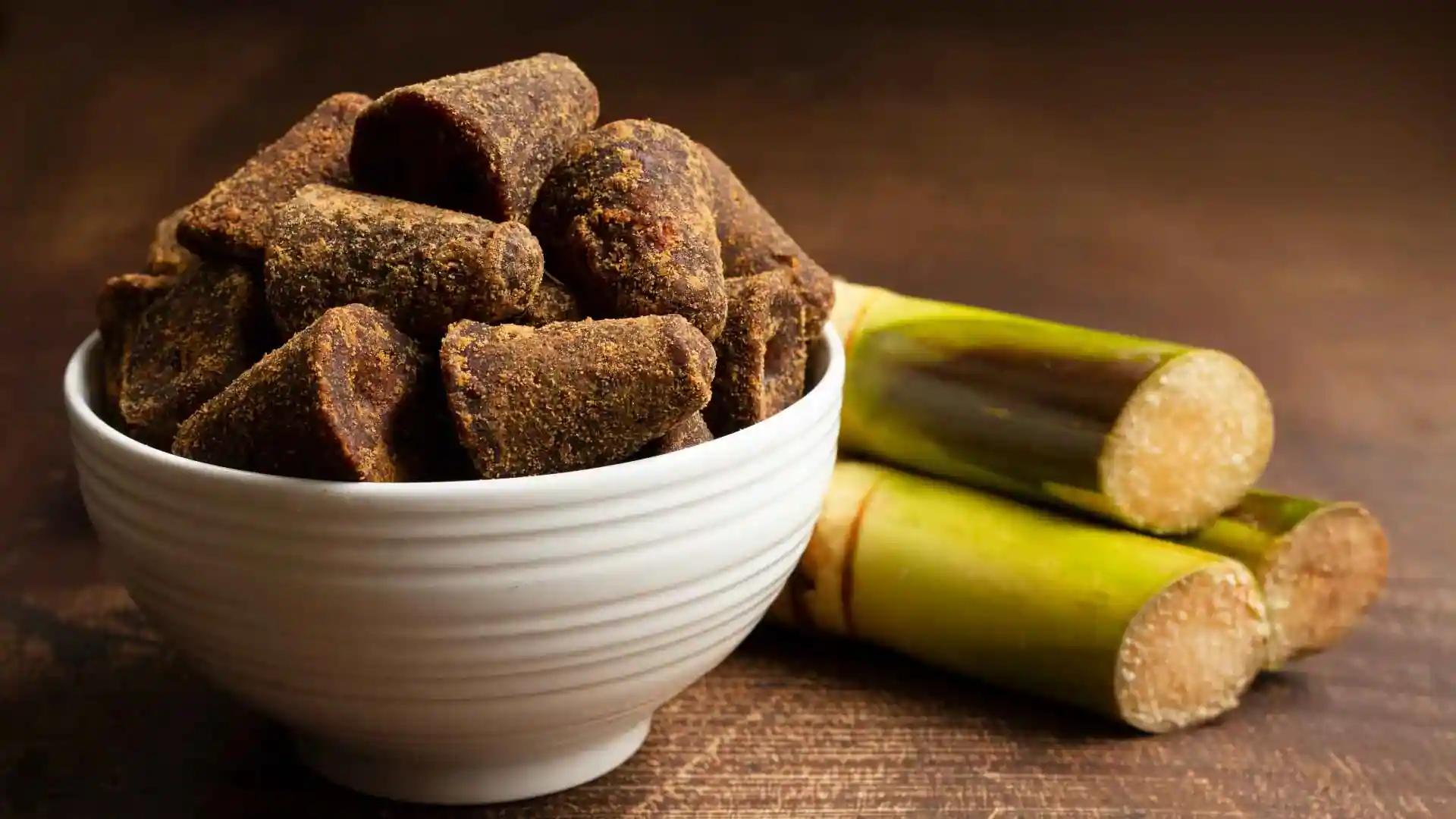
Travancore Jaggery, a prized sweetener from Kerala’s Central Travancore region, continues to captivate palates with its rich legacy. Originating centuries ago under the Travancore Royal Family, this GI-tagged delicacy, crafted in Kottayam, Pathanamthitta, and Alappuzha’s Chengannur taluk, is made from sugarcane grown along the Pamba, Manimala, Achenkovil, and Meenachil rivers. Its unique sweetness and cultural significance, rooted in the region’s fertile soils, drive its appeal. Artisans boil sugarcane juice into forms like Pathiyan Sarkara and Unda, preserving a tradition that supports local livelihoods, as #TravancoreJaggery trends on X.
A Taste Shaped by Nature
Travancore Jaggery, also known as Central Travancore Jaggery (CTJ), owes its golden-brown hue and superior sweetness to the riverine alluvium soils enriched by monsoon floods. The Madhuri sugarcane variety, cultivated for its high yield and crystalline texture, is crushed and boiled in copper pans, with minimal lime added for calcium fortification. This process yields semi-solid Pathiyan or ball-shaped Unda, free of the salty taste found in jaggery from alkaline soils. Its distinct flavor enhances Kerala sweets like payasam, reflecting a heritage revived by farmers like Jose Kuncharakattil Abraham in Arumanoor.
Cultural and Economic Significance
Deeply woven into Kerala’s cuisine and rituals, Travancore Jaggery is a staple in festivals like Onam, adding depth to halwa and beverages. Its GI tag, granted in 2010, protects its identity, boosting local economies with sales of 10 tonnes annually at Rs. 150/kg from outlets like the Thiruvalla Agricultural Research Station. Yet, the tag’s exclusivity raises questions—does it limit innovation or fairly reward the 250–500 hectares of sugarcane farms struggling against industrial decline since the 1980s sugar mill closures?
Challenges and Revival Efforts
The craft faces threats from reduced cultivation—once a continuous belt, now fragmented—and labor shortages, relying on migrant workers. Mechanization attempts clash with traditional methods, while competition from refined sugar challenges its market. The ARS’s efforts to revive CTJ, producing toffee-like jaggery, aim to restore its glory, but critics wonder if this focus on premium sales overlooks small-scale producers.
A Sweet Future
Travancore Jaggery’s journey from royal kitchens to global tables underscores its resilience. As #KeralaHeritage trends, its future depends on sustaining artisanal craft amid modern demands, ensuring the riverbanks’ sweet legacy endures.
-By Manoj H