


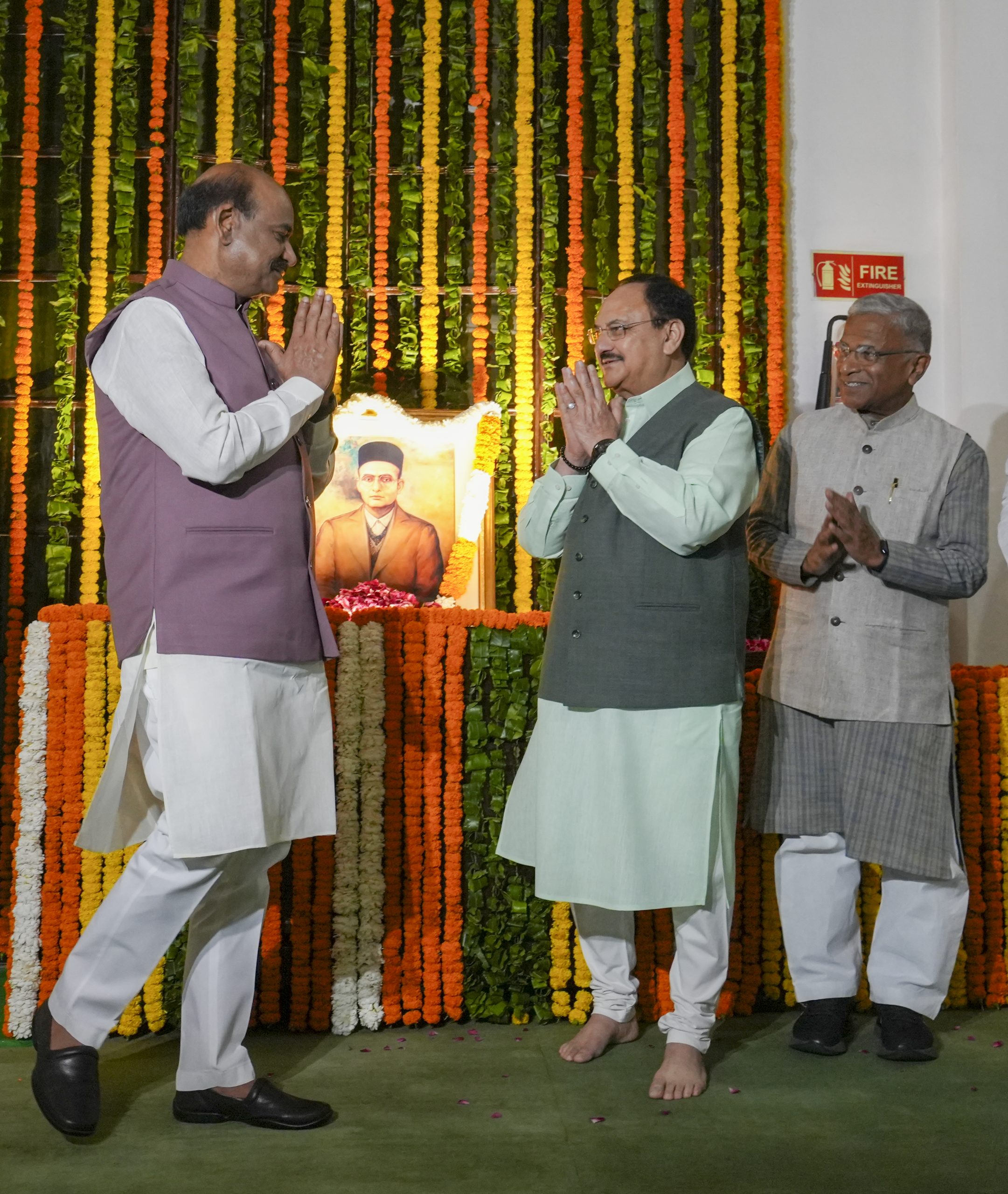
Vinayak Damodar Savarkar, more popularly known as Veer Savarkar, was one of the most influential and controversial figures of India’s freedom movement. A freedom fighter, poet, political thinker, and social reformer, Savarkar’s legacy continues to stir intense debates even decades after his death.
In This Article:
Born on May 28, 1883, in the village of Bhagur, Maharashtra, Savarkar rose to prominence for his radical views against British colonial rule, as well as his contributions to the concept of Hindutva. While revered by many as a nationalist icon, his political ideology and methods have sparked both admiration and criticism.
Early Life and Education
A Childhood Marked by Patriotism
- Born into a Chitpavan Brahmin family, Savarkar was deeply influenced by the spirit of resistance against British colonialism from a young age.
- Following the death of his parents, he was brought up by his elder brother, Ganesh Damodar Savarkar (Babarao), who was also involved in revolutionary activities.
Academic Brilliance and Political Awakening
- He pursued his early education at Fergusson College, Pune, and later earned a scholarship to study law in London at the Gray’s Inn.
- During his stay in the UK, Savarkar founded the Free India Society and authored ‘The First War of Indian Independence 1857’, which argued that the 1857 revolt was a unified national struggle, not just a mutiny.
Revolutionary Activities and Imprisonment
The London Years
- In London, Savarkar became a prominent figure among Indian revolutionaries.
- He was arrested in 1909 for his alleged involvement in a conspiracy to assassinate British officials and was extradited to India in 1910.
The Infamous Kalapani Sentence
- Sentenced to 50 years in prison, Savarkar was incarcerated in the Cellular Jail in the Andaman and Nicobar Islands, infamously known as “Kalapani”.
- Despite the brutal conditions, he wrote extensively, including petitions to the British government, some of which have been debated for their tone and implications.
Ideological Shift and Political Thought
From Revolutionary to Political Thinker
After his release in 1924, Savarkar settled in Ratnagiri under strict surveillance. It was during this period that he began formulating the ideological framework of Hindutva—a cultural and national identity centered around Hindu civilization.
Authoring the Ideology of Hindutva
- His 1923 book ‘Hindutva: Who is a Hindu?’ laid the foundation for the political philosophy of Hindu nationalism.
- He argued that India was fundamentally a Hindu Rashtra (nation), and all citizens must align with this cultural ethos.
Role in Politics and Legacy
Leader of the Hindu Mahasabha
- Savarkar became the president of the Hindu Mahasabha in 1937.
- He opposed the Quit India Movement in 1942, stating that it was not strategically sound during World War II, a stance that drew sharp criticism from the Indian National Congress.
Controversy Over Gandhi Assassination
- Savarkar was arrested in connection with Mahatma Gandhi’s assassination in 1948 due to his ideological influence over Nathuram Godse.
- He was later acquitted due to lack of concrete evidence, but the controversy has remained deeply embedded in historical and political discourse.
Contributions Beyond Politics
- A prolific writer, Savarkar contributed significantly to Marathi literature, penning plays, poetry, and essays.
- He strongly opposed the caste system and untouchability, advocating for social reforms that would unify Hindu society.
Death and Posthumous Recognition
Savarkar passed away on February 26, 1966. In the years that followed, political parties, particularly the Bharatiya Janata Party (BJP) and its allies, have emphasized his legacy as a fearless patriot.
- In 2002, the Indian government issued a commemorative stamp in his honor.
- The Port Blair airport was renamed Veer Savarkar International Airport in his memory.
Ten Facts About Veer Savarkar
- Coined the term ‘Hindutva’.
- Authored a historical reinterpretation of the 1857 revolt.
- Founded the Free India Society in London.
- Was sentenced to 50 years in the Cellular Jail.
- Wrote extensively from prison.
- Advocated for Hindu unity and social reform.
- Opposed Gandhi’s strategies during WWII.
- Acquitted in Gandhi’s assassination case.
- Wrote numerous books, plays, and poems in Marathi.
- Continues to be revered and debated in Indian politics.
Moving Ahead
Veer Savarkar’s life was a blend of fierce nationalism, scholarly output, and political controversy. His contribution to India’s freedom struggle and his ideological legacy are still widely discussed and interpreted. For some, he is a hero who redefined Indian nationalism; for others, a divisive figure. Regardless of perspective, his influence on India’s socio-political history remains indelible.
By – Nikita