


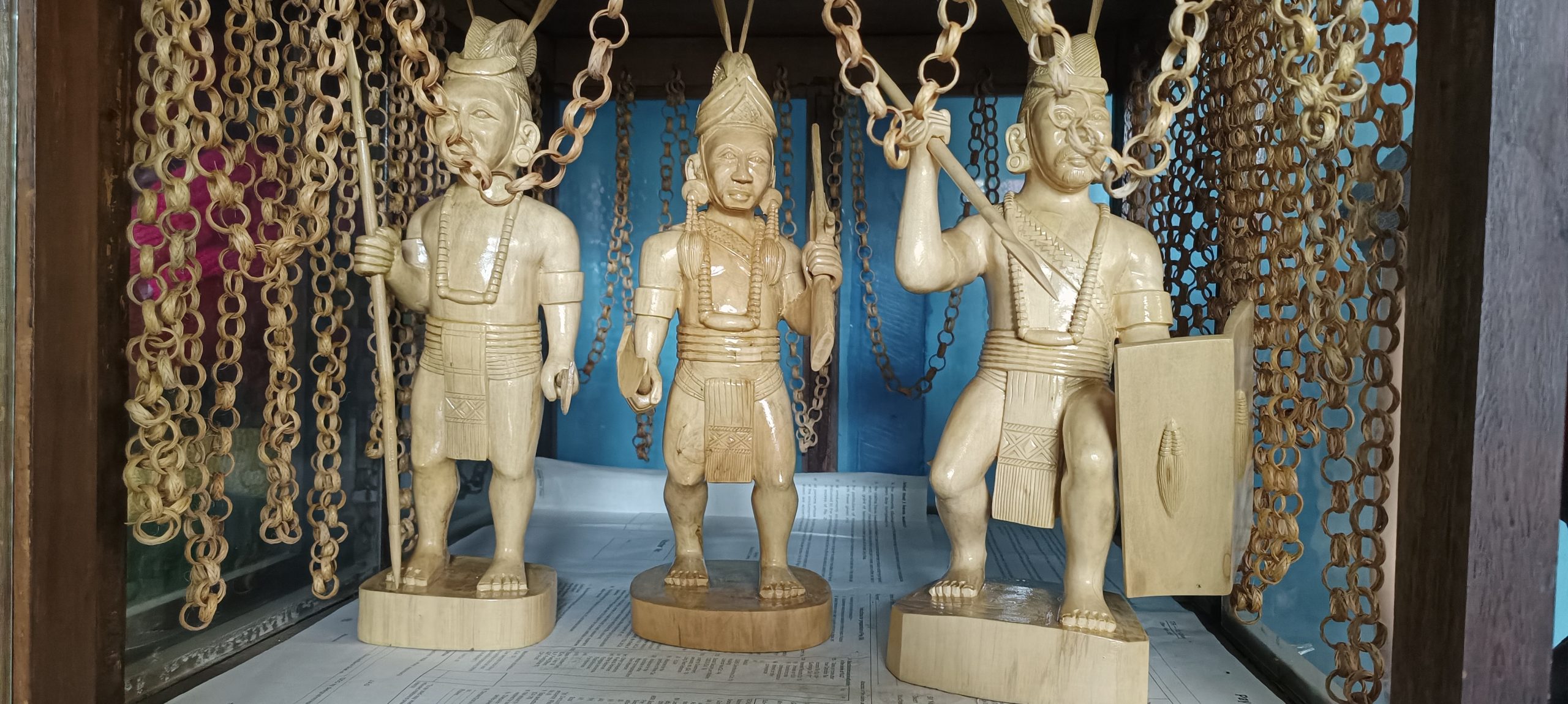
Wancho wooden craft is a distinctive indigenous woodcarving tradition rooted in the cultural life of the Wancho community of Arunachal Pradesh. The practice is strongly associated with the Wancho belt of Longding and adjoining areas, where carving continues to serve as both artistic expression and cultural memory.
Cultural roots and living traditions
Traditionally, woodcarving was closely linked to community institutions—especially the bachelors’ dormitory system (often described using the Wancho term “Paa”)—where oral traditions, social learning, and visual symbolism moved together. Carved figures and motifs have long reflected clan identity, spiritual beliefs, and the community’s relationship with the natural world.
Materials, tools and craft language
Artisans typically work with durable hardwoods and rely on hand tools such as chisels and a wooden mallet. The craft’s visual vocabulary includes geometric patterns and stylised human/animal forms, with products ranging from masks and totems to figurines and miniature cultural structures.
Signature objects and symbolism
Many Wancho carvings are not merely decorative; they carry ritual and social meaning. Masks and totems, for instance, are associated with cultural occasions and collective identity. A related emblem of Wancho craftsmanship frequently highlighted in documentation is the Kham (log drum)—an object of deep cultural and ceremonial significance.
Geographical Indication recognition
In a major milestone for recognition and protection, Wancho wooden craft received a GI tag in early 2024, alongside other Arunachal products. The GI status helps protect the craft name from misuse and strengthens its linkage to origin and established traditional practice.
Preservation and market support
Recent initiatives have aimed to convert heritage into livelihood. In Longding town, a wood carving centre and souvenir shop—constructed by Assam Rifles—was handed over to the Wancho Cultural Society to support artisans and sustain local craft-based employment.
Challenges and the road ahead
Like many heritage crafts, Wancho woodcarving faces pressure from out-migration, changing aspirations, and the time-intensive nature of traditional production. Going forward, GI-led branding, stronger market linkages, craft tourism, and youth skilling can help ensure the tradition remains economically viable while staying culturally authentic.
—By Sonali