


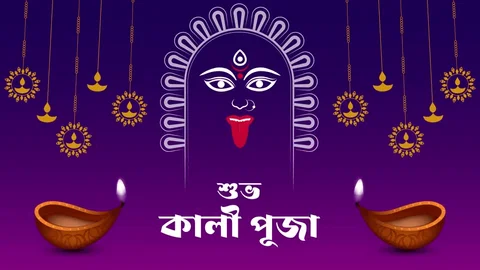
In the cosmic dance of Indian festivals, where most of the country celebrates the triumph of light over darkness through Diwali’s golden glow, West Bengal writes its spiritual script in bold strokes of crimson and black. Here, the new moon night of Kartik transforms into something far more mystical—Kali Puja, where devotees seek not just illumination but the fierce protection of the Divine Mother herself.
The Sacred Timing: When Goddess Kali Descends
Kali Puja 2025 falls on Monday, October 20th, coinciding with Diwali celebrations across India. However, the timing of this Bengali festival carries its own unique significance. TThe most auspicious period of worship occurs during Nishita Kaal, the midnight hour, from 11:41 PM on October 20th to 12:31 AM on October 21st. This 50-minute window represents the peak of the goddess’s divine energy, when her fierce grace is believed to be most accessible to devoted souls.
The festival follows the lunar calendar and is celebrated on Dipannita Amavasya (the illuminated new moon day) of the month of Kartik. Unlike Diwali, which observes the Amavasya tithi during Pradosh (evening twilight), Kali Puja is based on the Amavasya tithi at midnight, which can result in it occurring on a different day than Diwali.
The Mythological Foundation: From Durga’s Wrath Emerges Kali
The spiritual foundation of Kali Puja rests on one of Hinduism’s most powerful myths. According to the Markandeya Purana, when Goddess Durga battled the demon Raktabija, who possessed the terrifying ability to multiply every drop of his spilled blood, divine intervention was required. From Durga’s forehead, Goddess Kali emerged, fierce and unstoppable; she drank the demon’s blood before it could touch the ground, thus preventing the demon’s multiplication and ensuring victory over evil.
This mythological narrative transforms Kali Puja into something far deeper than a festival; it becomes a celebration of the destruction necessary for creation, where the Divine Mother’s wrath serves as the ultimate protector against all forms of negativity.
Bengal’s Unique Spiritual Expression: Where Diwali Meets Tantra
While the rest of India lights diyas for Lakshmi, Bengal’s spiritual consciousness turns toward the fierce compassion of Kali. This distinction reflects the region’s deep connection with Shakti worship and Tantric traditions. The festival gained prominence during the 18th century under King Krishnachandra of Nadia and experienced a renaissance in the 19th century through the influence of Sri Ramakrishna Paramhansa at Dakshineswar.
The celebration embodies Bengal’s philosophical understanding that destruction and creation are inseparable forces- Kali destroys ego, ignorance, and evil to nurture spiritual renewal. This makes Kali Puja not merely a religious observance but a profound spiritual journey toward moksha (liberation).
The Mystical Eve: Bhoot Chaturdashi and the Veil Between Worlds
The spiritual intensity of Kali Puja begins even before the main celebration, starting with Bhoot Chaturdashi, which is observed on October 19th, 2025. This unique Bengali tradition, often called “Bengal’s Halloween,” acknowledges the belief that spirits of fourteen generations of ancestors descend to earth on this night.
Families participate in the ritual of “Choddo Prodip” lighting fourteen earthen lamps around their homes to guide ancestral spirits and ward off malevolent entities. The day also features the consumption of “Choddo Shaak” a nutritious dish prepared with fourteen different leafy greens, symbolically connecting health, spirituality, and ancestral reverence.
Sacred Spaces: Where the Divine Mother Resides
Bengal’s spiritual landscape comes alive through its iconic Kali temples and elaborate pandals (temporary structures). The most revered sites include:
Dakshineswar Kali Temple, built by Rani Rashmoni between 1847-1855, stands as the spiritual headquarters where Ramakrishna Paramhansa achieved his divine realizations. Located on the banks of the Hooghly River, this Navaratna-style temple houses Bhavatarini, a benevolent form of Kali.
Kalighat Temple, one of the 51 Shakti Peethas, holds legendary significance as the site where Goddess Sati’s toes fell during Shiva’s cosmic dance. The temple’s name is believed to be the origin of “Calcutta” or “Kolkata,” establishing the city as “Kali’s domain”.
Beyond Kolkata, the festival reaches its most spectacular expressions in Barasat and Madhyamgram, which have earned recognition as the premier destinations for Kali Puja celebrations. These towns host over 20 major community pujas, each featuring elaborate pandals with innovative themes and towering idols.
Midnight Rituals: The Sacred Dance of Devotion
The heart of Kali Puja lies in its nocturnal worship, a practice that sets it apart from most Hindu festivals. The celebration begins at midnight, honoring Kali’s associations with time, darkness, and transformation.
Tantric elements infuse the worship, with priests performing specialized rituals and devotees maintaining vigils throughout the night. The goddess receives offerings of red hibiscus flowers (her sacred blooms), sweets, rice, and lentils. In traditional practices, symbolic offerings and in some communities, ritual sacrifices are made, though modern celebrations have largely moved toward vegetarian alternatives.
The ritual culminates with the powerful “Om Krim Kalikayai Namah” mantra, chanted with deep devotion as devotees seek protection from negative energies and spiritual enlightenment.
The Sacred Feast: 108 Noibedyo Bhog and Culinary Traditions
Kali Puja’s culinary traditions reflect Bengal’s sophisticated understanding of sacred gastronomy. The centerpiece offering is the “108 Noibedyo Bhog” an elaborate feast featuring 108 different food items presented to the goddess. This represents one of the most comprehensive ritual offerings in Hinduism.
The traditional bhog includes:
- Bhoger Khichuri: A sacred rice and lentil preparation made with Gobindobhog rice and roasted moong dal, cooked without onion or garlic
- Labra: A mixed vegetable curry featuring seasonal produce, enhanced with grated coconut and subtle sweetness
- Niramish Mangsho: The unique “vegetarian mutton” sacrificial goat meat prepared without onion and garlic, making it ritually pure
- Traditional sweets: Including payesh (rice pudding), rosogolla, and sandesh
The restriction on onion and garlic in bhog preparations stems from their classification as tamasic foods in Hindu tradition, avoided during sacred offerings to maintain spiritual purity.
Community Celebrations: Pandal Culture and Artistic Expression
Modern Kali Puja celebrations showcase Bengal’s artistic heritage through elaborate pandals that rival those of Durga Puja. CCommunity organizations spend months creating thematic installations that blend traditional reverence with contemporary social messages.
Pandal hopping becomes a night-long cultural journey, with devotees dressed in their finest attire visiting multiple celebrations. The experience includes:
- Artistic installations featuring innovative interpretations of Kali imagery
- Cultural performances including traditional music and dance
- Community feasting where prasad is distributed to thousands
- Fireworks displays that illuminate the autumn sky (following environmental guidelines)
Political and Social Dimensions: When Leadership Meets Devotion
The festival also serves as a platform for political and social unity. Chief Minister Mamata Banerjee continues a family tradition established by her mother in 1978, hosting Kali Puja at her Kalighat residence and emphasizing the “Maa-Mati-Manush” (Mother-Soil-People) philosophy. This integration of political leadership with religious observance reflects Bengal’s unique approach to governance and spirituality.
The Deeper Symbolism: Destruction as Divine Grace
At its philosophical core, Kali Puja represents the paradox of divine love expressed through fierce protection. The goddess’s terrifying appearance with her garland of skulls, blood-stained sword, and dance upon Shiva symbolizes the destruction of ego, ignorance, and spiritual obstacles.
For Bengali devotees, this night represents spiritual renewal through surrender, recognizing that sometimes divine grace manifests not as gentle comfort but as the fierce love that destroys everything preventing spiritual growth.
Contemporary Relevance: Ancient Wisdom for Modern Times
In today’s world of uncertainty and chaos, Kali Puja’s message resonates with profound relevancy. The festival reminds devotees that facing life’s darkness requires not just light, but the courage to embrace transformation, even when it comes through destruction of familiar patterns.
The midnight worship embodies the understanding that genuine spiritual awakening often occurs in life’s darkest hours, when conventional support systems fail and only divine grace remains.
By – Sonali