


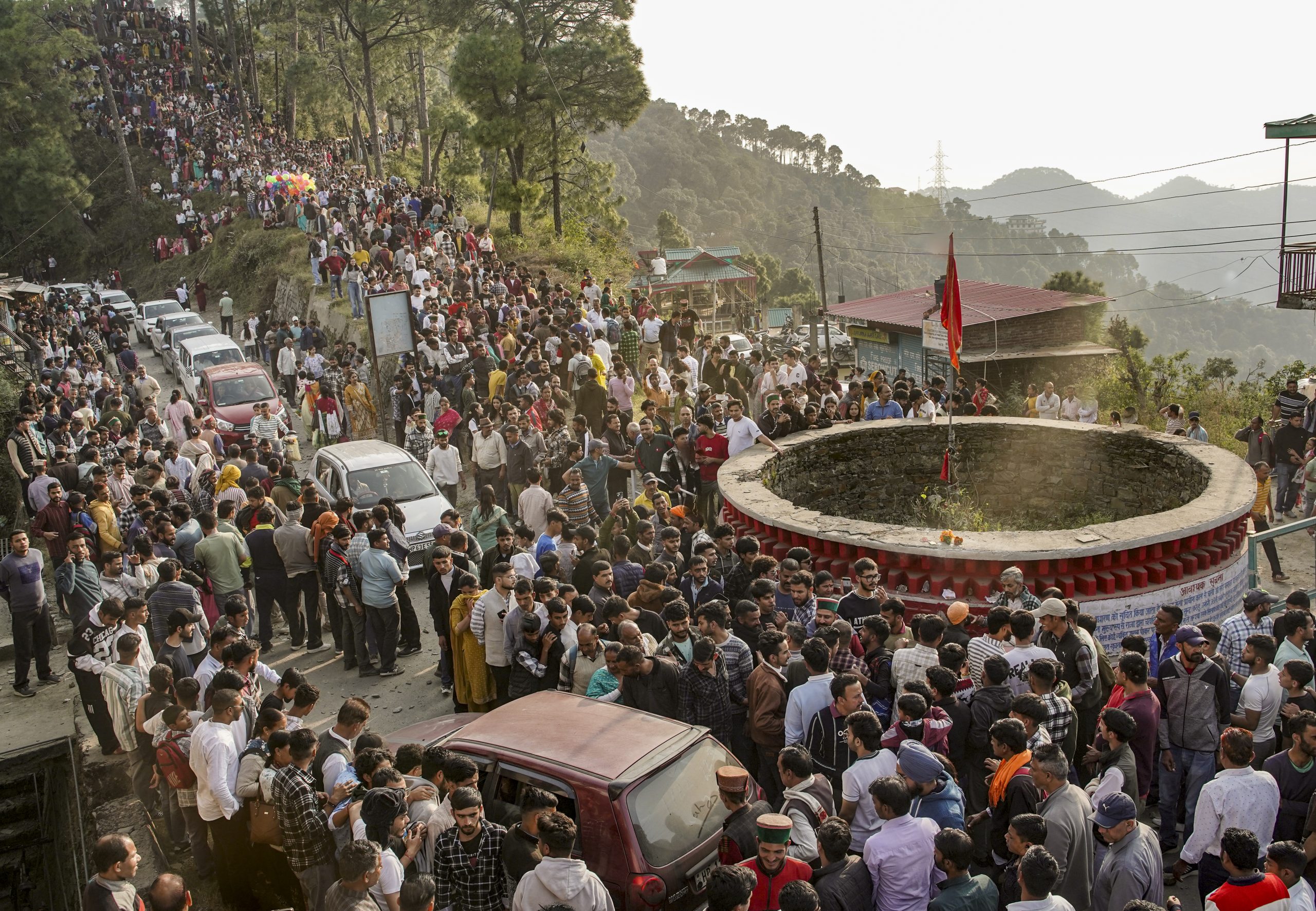
Around 30 kilometers from Shimla, the quiet Dhami village transforms every October into a site of adrenaline, devotion, and history. The air buzzes with excitement as villagers gather for the legendary ‘Pathron Ka Mela,’ a festival like no other in India, where stones replace flowers, and faith meets courage in a centuries-old ritual of remembrance.
Legacy Born from Loyalty
This striking tradition dates back to 1921, during the reign of the erstwhile dhami ruler Raja Jit Singh. Historical records and local lore recount how a tragic incident led to one of the ruler’s soldiers dying during a royal hunting expedition. To honor his memory, the people of Dhami began observing a fair where the two village groups, Sama and Gwaldi, hurled stones at each other as a symbolic act of sacrifice and courage.
What began as a mourning ritual slowly became a community tradition, blending faith with folklore. The mela, held on the day after Diwali, continues to mark the bond between devotion and tradition. Despite its aggressive form, it signifies healing, renewal, and unity.
The Ritual of Stone Pelting
As the fair day dawns, crowds gather near the Durga Temple, where the ceremony begins with reverential prayers. The villagers divide into two groups, each carrying baskets of small, rounded stones. Once the priest gives the signal, the ritualistic pelting begins.
The clash may seem fierce, but locals follow unspoken rules ensuring no one is seriously harmed. Many participants wrap cloths around their heads for protection, while others chant the Goddess’s name as they hurl stones with rhythmic precision. The act is considered a symbolic offering to goddess Kali, an ode to her fierce and protective form.
The ritual continues for about 15-20 minutes, and as the dust settles, the participants gather again for peace offerings. The first few drops of blood drawn during the fair are traditionally believed to symbolize good fortune and blessings for the coming year.
Modern Celebrations and Changing Times
In recent years, administrative safeguards and local police presence have become vital to maintaining safety. The Himachal Pradesh government ensures that participants follow safety norms and medical teams stay on standby. Plastic shields and helmets have even been introduced for protection, as authorities seek to balance tradition with safety.
Yet, the villagers remain firm about keeping the ritual alive in its original spirit. For them, Pathron Ka Mela is not just a spectacle, it’s a living reminder of collective identity, an event that links generations through shared belief and courage.
Tourists from nearby towns and visitors from across India now arrive in large numbers to witness this rare event. While some are astonished by the intensity of the tradition, many find themselves drawn to the deep-rooted faith behind it. The fair has also started gaining online attention as a symbol of India’s diverse and unusual cultural expressions.
Faith Over Fear
When the sun sets over Dhami’s terraced hills, the fair concludes not with rivalry but with laughter and community feasts. Bruises fade, but what remains is the pride of having upheld a ritual that carries nearly a hundred years of history.
Pathron Ka Mela stands as poignant proof that traditions, no matter how unconventional, carry the essence of who we are. In Dhami, every flying stone isn’t a weapon; it’s a story of faith, memory, and the strength of a community bound by time.
By – Sonali