


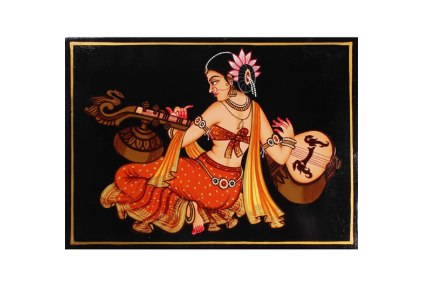
In a world where art often surrenders to mass production, there exists a sacred corner in Telangana where master artisans continue to weave mythology into wood, creating masterpieces that shimmer with the brilliance of centuries-old traditions. The Nirmal paintings, with their mesmerizing black backgrounds kissed by golden hues, tell stories that have survived empires, patrons, and the relentless march of time. This is not merely an art form; it is a living testament to human creativity and cultural resilience.
A Legacy Traced Through Centuries
The Nirmal painting tradition stretches back to the 14th century during the reign of the Kakatiya dynasty, making it one of India’s most enduring artistic heritages. According to local legends, the Naqash community custodians of this craft migrated from Rajasthan, bringing their artistic expertise to the small town of Nirmal, approximately 220 kilometers from Hyderabad. What began as decorative panels and wall murals evolved into a sophisticated art form that captured the attention of emperors and nobles alike. The Nizam of Hyderabad became such a devoted patron that Nirmal paintings were woven into the region’s cultural fabric and even incorporated into dowry traditions.
The Art of Transformation: Techniques and Materials
Creating a Nirmal painting is an intricate dance of precision and patience that can take weeks to complete. The process begins with selecting Poniki wood or white sander soft woods that have traditionally served as the canvas for these masterpieces, later complemented by teak and rosewood. Artisans meticulously prepare the wooden surface by applying multiple coats of Luppa paint, sanding it repeatedly, and coating it with primer and Duco paint to ensure longevity and moisture resistance.
Unlike many traditional Indian painting techniques, Nirmal art relies on meticulous tracing rather than freehand work. Artists prepare detailed designs on tracing mediums and carefully chalk them onto the prepared surface. What sets this form apart is its distinctive color palette: a deep black or dark brown background that makes every figure burst into vibrant life. Once the background is complete, artists apply bright, flat colors with precision, often incorporating natural pigments extracted from herbs, flowers, minerals, and gems, a practice that continues to honor ancient traditions.
The finishing touch is nothing short of magical: artisans delicately apply gold leaf or gilding, historically using herbal extracts, transforming the entire composition into a gleaming tribute to mythology and beauty. A final varnish coating provides waterproofing and a glossy sheen that makes these paintings endure for generations.
Stories Painted in Gold and Shadow
The thematic richness of Nirmal paintings reflects Telangana’s deep cultural roots. Scenes from the Mahabharata and Ramayana dominate many works, bringing epic narratives to vivid life through the artists’ skilled hands. The depiction of women holds particular significance, influenced by the delicate romanticism of the Kangra School of Art with graceful lines and subtle expressions that convey profound emotion. Beyond mythology, Nirmal artists celebrate village life, royal processions, marriage rituals, and the region’s spectacular flora and fauna.
The influence of Ajanta cave art, Mughal miniatures, and Pahari paintings is evident in the paintings’ naturalistic style and sophisticated composition. This fusion of indigenous and foreign aesthetic traditions creates a visual language that speaks to both the heart and the intellect.
Preserving Heritage in Modern Times
Today, the Nirmal tradition faces the challenges of modernization, yet it refuses to fade. The town recently earned national recognition in the “Crafts” category by the Ministry of Tourism, underscoring its importance as a cultural hub. Government initiatives, art galleries, and exhibitions have provided platforms for these artisans to showcase their work globally. Hundreds of families, particularly women in the Nirmal district, depend on this craft for their livelihood, making the preservation of this art form an act of community empowerment.
Artisans continue to pass their knowledge to younger generations, adapting the tradition to modern mediums like textiles and ceramics while maintaining its authentic essence.
A Living Masterpiece Awaits
As the world increasingly craves authenticity and cultural connection, Nirmal paintings emerge as more than mere decorative objects; they are repositories of history, craftsmanship, and soul. Each brushstroke carries the weight of centuries, each golden hue whispers of untold stories. In supporting these artisans and their magnificent creations, we do not simply purchase art; we ensure that the voice of tradition continues to echo through generations to come, reminding us that true beauty is timeless.
By – Sonali