


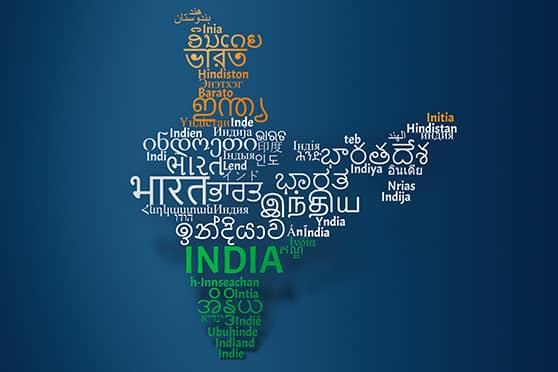
India is home to an astonishing number of languages—more than 19,500 mother-tongue names (raw returns) were recorded in the 2011 census, with 121 languages presented at the all-India level, and 22 scheduled languages officially recognised in the Constitution. Hindi, Bengali, Telugu, Marathi, Tamil, Gujarati, Kannada, Punjabi, Odia, Malayalam, Assamese and others are spoken by tens of millions each, while hundreds of smaller languages and dialects thrive in villages, hills and forests. Why does one country have so much linguistic diversity? The answer lies in history, geography and culture.
A Very Old Civilisation with Many Waves of People
India has been continuously inhabited for over 5,000 years. Different groups arrived at different times: the earliest inhabitants, later Indo-Aryan speakers from Central Asia around 1500 BCE, Dravidian-speaking communities already present in the south, Austroasiatic tribes in central and eastern India, Tibeto-Burman groups in the northeast, and later arrivals such as Persians, Arabs, Turks, Afghans, Mughals, Portuguese, Dutch, French and British. Each group brought its own language or influenced existing ones, adding layers over centuries.
Geography Kept Communities Separate
India’s landscape is extremely varied—towering Himalayas in the north, dense forests and rivers in central India, long coastlines, the Thar desert, and the rugged Western and Eastern Ghats. These natural barriers limited travel and mixing for thousands of years. A village in a remote valley or hill region could live for generations with little contact with people 100 km away, so their speech evolved separately into distinct languages or dialects.
No Single Empire Ever Fully Unified Language
Unlike China, where one writing system and central authority helped standardise Mandarin, India rarely had long-lasting empires that covered the entire subcontinent and enforced one language. Even powerful kingdoms like the Mauryas, Guptas, Cholas, Mughals and British ruled over multilingual regions and usually let local languages continue. Sanskrit, Persian and English became link languages for administration and elites, but never replaced everyday speech.
Rich Oral Traditions and No Pressure to Unify
India has always valued oral storytelling, poetry, songs and religious texts in local languages. Epics like the Ramayana and Mahabharata were retold in dozens of regional versions. Bhakti and Sufi saints composed in the languages people actually spoke—Tamil, Kannada, Marathi, Bengali, Punjabi, Gujarati, Assamese and more. Because literature, devotion and identity were tied to local tongues, there was never strong pressure to adopt one “national” language for daily life.
Modern Recognition Keeps Diversity Alive
After independence, India chose not to impose one language. The Constitution recognises 22 scheduled languages, gives official status to Hindi and English, and protects linguistic minorities. States were reorganised largely on linguistic lines in 1956, so languages gained political and cultural power. Today, school education, newspapers, television, films, books and government work happen in many languages, helping even smaller ones survive.
In short, India has so many languages because of thousands of years of migration, natural barriers that kept communities apart, no long-term central push to unify speech, strong local pride in literature and identity, and modern policies that protect diversity. It’s not a weakness—it’s a reflection of a civilisation that has welcomed, absorbed and preserved many voices for millennia.
-By Manoj H