


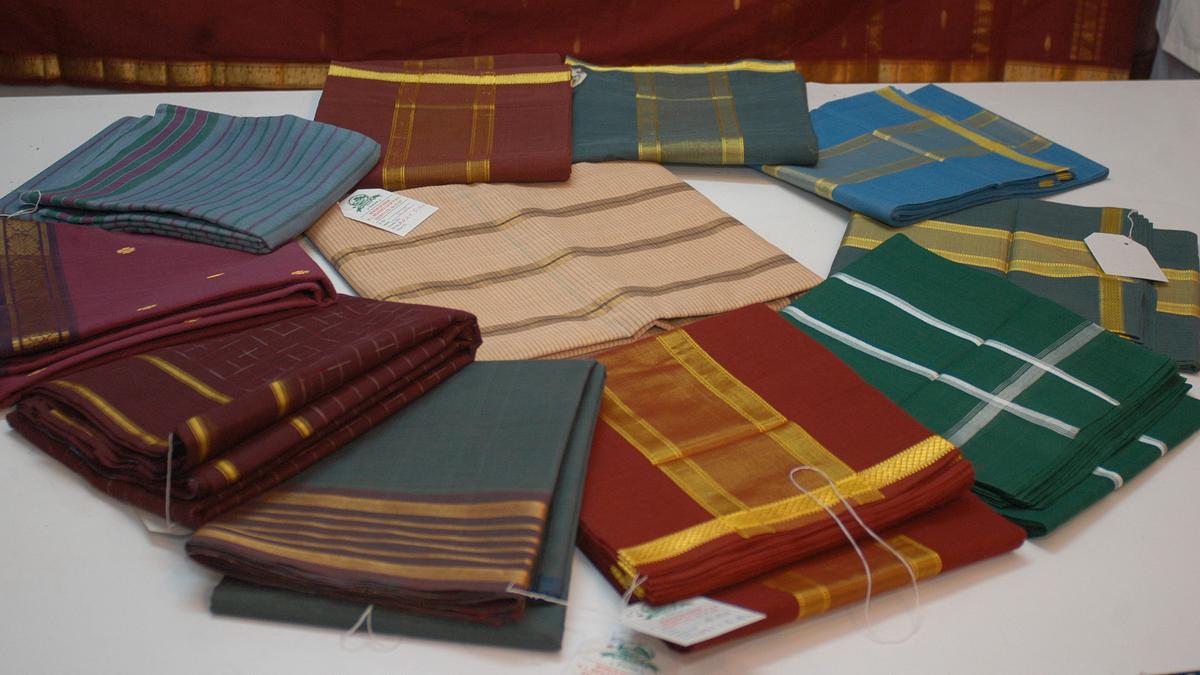
In the bustling heritage town of Woraiyur, the rhythmic clatter of the handloom has always been more than just a sound; it is the heartbeat of a civilization that dates back to the Chola empire. This week, that heartbeat grew stronger. In a landmark victory for the artisan community, the Woraiyur Cotton Saree has officially been granted the Geographical Indication (GI) tag, cementing its place on the global map of protected heritage crafts.
For the weavers of the Devanga community, this recognition is not just a certificate; it is a lifeline. After decades of battling power-loom imitations and dwindling markets, the ancient craft has received a “shield of authenticity” that promises to revive the fortunes of one of Tamil Nadu’s finest textiles.
The Chola Legacy: A Thread Running Through History
Long before it was a pin on a GI map, Woraiyur was the flourishing capital of the early Cholas. It was a hub where Greek traders once bartered gold for fine muslin, immortalized in Tamil literature for its cloud-like lightness. The Woraiyur saree carries this genetic memory. Unlike the heavy silks of Kanchipuram that scream opulence, the Woraiyur cotton is the fabric of dignity and daily grace.
For generations, the Devanga weaving community has guarded this tradition. “Our fathers taught us that the cloth doesn’t just cover the body; it breathes with it,” says K. Palanisamy, a third-generation weaver from the Woraiyur Devanga Handloom Weavers’ Cooperative Society. “This GI tag tells the world that what we make cannot be copied by a machine in a factory.”
The Anatomy of Authenticity
What makes a Woraiyur saree unmistakable? It is a masterclass in minimalism.
The magic lies in the 80s count cotton yarn, combed to a fineness that feels weightless yet durable. But the true signature is the ‘Korvai’ border, a technique where the border and the body are woven separately and then interlocked with a petni (joint) that is so seamless it looks like a single stroke of paint.
Visually, these sarees are a riot of specific, culturally rooted colors. You won’t just find ‘purple’ here; you will find vaadaamalli (the deep grandeur of the bachelor’s button flower) or maamparuppu (the earthy yellow of mango kernel). The motifs are strictly geometric, eschewing floral flamboyance for the precision of the diamond mokku (diamond bud), muthu seer (pearl lines), and the vanki (chevron) patterns.
Locals swear by a secret ingredient: the Cauvery river. It is said that the mineral-rich water of the Cauvery, used for dyeing the yarn, gives the Woraiyur saree its distinct brilliance and an ability to hold dye that refuses to fade, even after years of washing.
A Weaver’s Reality: The Fight for Survival
Despite its royal lineage, the craft was arguably on its “last legs” just a decade ago. A 2013 report painted a grim picture of a dwindling workforce, with the number of weavers crashing from thousands to mere hundreds. The younger generation, disillusioned by low wages and the intense physical labor required for the manual Korvai technique, began migrating to other industries.
The GI tag, awarded on December 2, 2025, aims to reverse this exodus. By legally preventing unauthorized use of the “Woraiyur” brand name, the tag ensures that the premium price customers pay actually reaches the hands that threw the shuttle.
“We have seen powerlooms flood the market with cheap synthetics labeled as ‘Woraiyur Cotton’,” explains an official from the Tamil Nadu Department of Handlooms. “Now, a customer can look for the GI logo. If it doesn’t have it, it’s just a cotton saree, it’s not Woraiyur.”
The Modern Drape
Today, the Woraiyur saree is finding a new audience. No longer confined to the wardrobes of grandmothers, it is being reimagined by younger women who value sustainability and “breathable luxury.” The saree’s width is typically 47 to 50 inches, and its tall borders make it versatile for modern draping styles.
The revival is also being supported by state initiatives, including the formation of new handloom clusters and the introduction of modern loom accessories that reduce physical strain without compromising the manual weaving process.
As the winter sun sets over the banks of the Cauvery, the looms in Woraiyur are moving a little faster today. The thread has not broken; it has just been strengthened. The Woraiyur cotton saree has survived empires and industrial revolutions, and now, it has the armor to survive the future.
By – Sonali